Understanding the Syndrome
Post-Acute COVID-19 Vaccine Syndrome (PACVS) is a proposed clinical condition involving persistent, multi-system symptoms that develop weeks, months, or even years after COVID-19 vaccination. It is distinct from acute vaccine reactions and shares features with post-viral syndromes such as ME/CFS and dysautonomia, but appears to involve unique mechanisms triggered by mRNA vaccine exposure.
PACVS is still under investigation, but recent laboratory research and clinical experience point to a complex pattern of immune dysfunction, mitochondrial injury, vascular irritation, and systemic breakdown of energy and repair mechanisms.
Proposed Mechanisms Behind PACVS
- Spike Protein Persistence
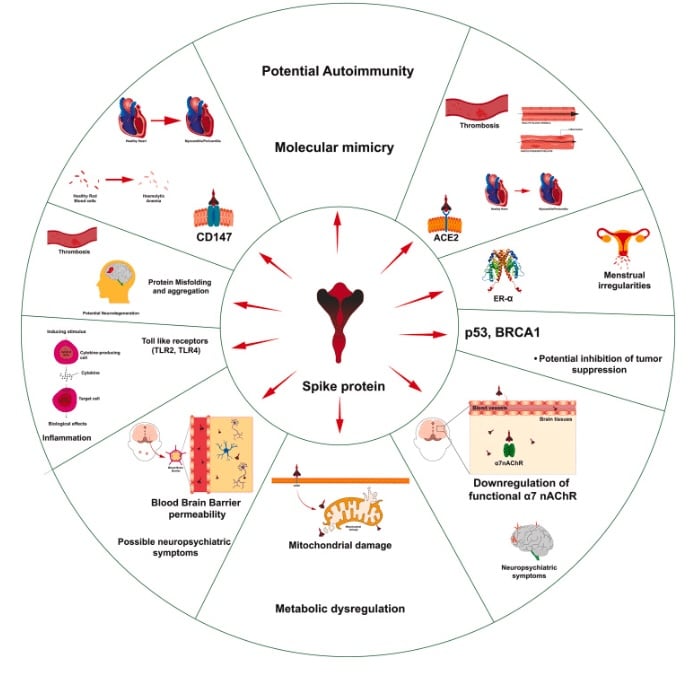
Studies have shown that in some individuals, spike protein may remain detectable in the blood plasma and exosomes (tiny vesicles secreted by cells) long after vaccination. This spike protein is often unbound and biologically active, capable of stimulating the immune system and interacting with tissues throughout the body.
Persistent spike protein may explain:
- Chronic immune activation
- Vascular symptoms
- Post-exertional fatigue
- Autoimmune responses
This has been measured using ultrasensitive spike protein assays targeting the original Wuhan variant.
- Plasmid DNA in Immune Cells (PBMCs)
mRNA vaccines are manufactured using plasmid DNA templates. In some individuals, fragments of this DNA (such as SV40 enhancer, ori region, and spike coding sequences) have been detected in PBMCs — a type of white blood cell involved in immune defense.
This raises concerns that immune cells may:
• Take up plasmid DNA unintentionally
• Remain in an active or reactive state
• Contribute to prolonged spike-related signaling 
While this remains a research topic, its presence years later suggests potential for immune persistence beyond the original intent of vaccination.
- Immune Dysregulation and Autoantibodies
Testing has revealed:
- Low neutrophils and white blood cells (indicative of immune suppression or depletion)
- Elevated D-dimer (marker of clotting or inflammation)
The presence of autoantibodies targeting:
- β1/β2-adrenergic receptors (linked to heart rate and blood pressure)
- Muscarinic receptors (M3/M4) (involved in gut, salivary, and nervous system function)
- ACE2 and AT1R receptors (which regulate vascular tone and inflammatory signaling)
These autoantibodies are associated with:
- Vascular inflammation
- Dysautonomia and POTS-like symptoms
- Fatigue, cognitive symptoms, and post-exertional crashes
- Mitochondrial Dysfunction and Tissue Catabolism
Functional testing often shows:
- Elevated succinic acid, indicating a block in Complex II (succinate dehydrogenase) of the mitochondrial energy pathway
- High lactate, low pyruvate, and elevated LDH, signaling a shift toward anaerobic metabolism
What is Complex II?
Complex II is a key part of the mitochondrial system that converts succinate to fumarate — helping generate cellular energy (ATP). When blocked, it leads to poor energy output and increased oxidative stress.
In parallel, many individuals show:
- Low essential and branched-chain amino acids
- Ongoing weight loss and muscle breakdown despite adequate nutrition
- Cachexia-like changes – a state of irreversible tissue wasting not correctable by diet alone
This catabolic state may explain fatigue, weight instability, reduced muscle function, and slow recovery after exertion.
- Gut Microbiome and Permeability Disruption
Multiple forms of gut testing have shown:
- Elevated Streptococcus species and other pathogenic bacteria and low beneficial bacteria (Lactobacillus, Bifidobacterium)
- Signs of SIBO (Small Intestinal Bacterial Overgrowth)
- Elevated zonulin, a marker of intestinal permeability (“leaky gut”)
These disruptions can lead to:
- Increased food sensitivities
- Nutrient malabsorption
- Chronic GI symptoms
- Further immune reactivity via the gut–brain–immune axis
- Coagulation and Vascular Stress
PACVS often presents with:
- Mildly elevated D-dimer
- Platelet or fibrin irregularities
- Symptoms of microvascular inflammation, including burning, tingling, or chest pressure
Persistent spike protein or autoantibodies may target vascular endothelial cells, contributing to impaired circulation and clotting dysregulation
- Autonomic and Parasympathetic Dysfunction
A hallmark of PACVS is autonomic imbalance, including:
- Elevated resting heart rate
- Heat intolerance
- Sensitivity to supplements or environmental triggers
- Symptoms mimicking anxiety or sympathetic overdrive
This may be due to:
- Spike protein effects on nicotinic receptors
- Loss of parasympathetic tone, which normally dampens inflammation
- Autoantibodies targeting key autonomic signaling receptors
PACVS appears to be a syndromic response triggered by prolonged exposure to vaccine-related biological elements, especially from mRNA platforms. It is associated with:
- Spike protein persistence
- Plasmid DNA uptake by immune cells
- Autoimmunity and receptor-level dysfunction
- Mitochondrial energy failure and tissue catabolism
- Microbiome disruption and GI permeability
- Coagulation imbalances and microvascular stress
- Nervous system dysregulation and post-exertional crashes
While not yet formally classified in diagnostic manuals, increasing numbers of clinicians and researchers are recognizing this pattern and using immune, mitochondrial, and gut testing to document its biological footprint.